Acoustic Performance of Sandwich Panels: Improving Noise Control in Modern Buildings

The current construction environment makes managing building noise challenging. Noise control has been a key concern. If you are working on a construction project, it is clear that unwanted noise can disrupt peace. However, sandwich acoustic panels provide an effective noise-control solution. They also offer additional benefits for structural construction efficiency. This article explains how acoustic panels improve noise control in modern buildings.

Understanding the Composition and Acoustic Mechanism

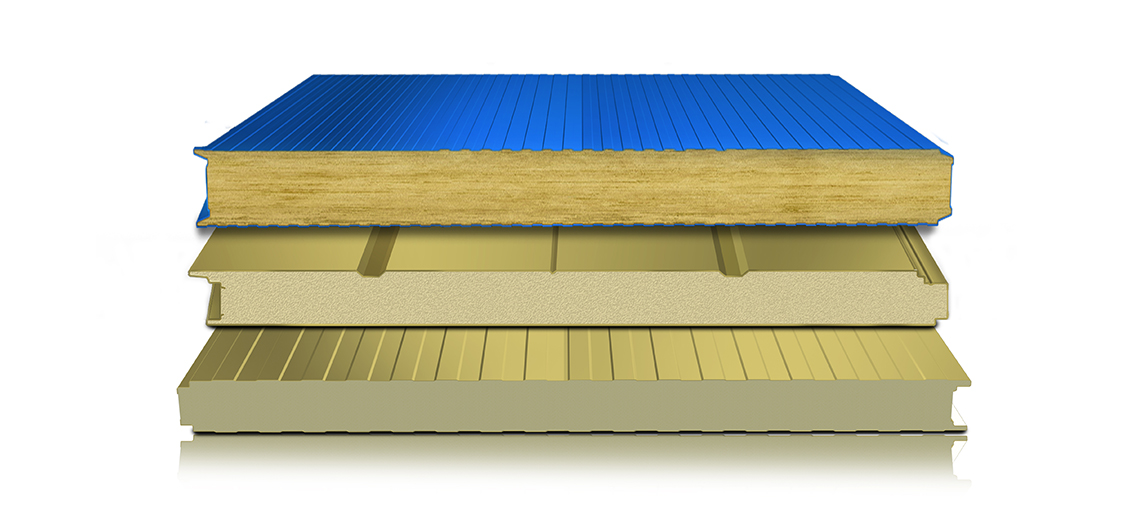
The noise-reduction performance of sandwich panels comes directly from their layered design. The outer faces offer strength and protection. At the same time, the inner material provides the primary insulating functions.  The main properties of acoustic panels are given below.

  • Layered panel design.
  • Core sound absorption.
  • Reduced noise transmission.
  • Density affects performance.
  • Thickness improves insulation.
  • External noise reduction.

The standard core materials are polyisocyanurate, polyurethane foam, and mineral wool. In order to be acoustically efficient, the core absorbs the sound waves.


Sound Transmission and Reverberation Control

These determine a panel’s ability to block airborne noise. Numerous configurations are rated for environments requiring moderate to significant noise reduction. Panels with mineral wool cores perform exceptionally well due to their fibrous structure.

Ensure the following infrastructure qualities with good STC ratings.

  • STC rating management.
  • Airborne sound blocking.
  • Mineral wool efficiency.
  • Conversation privacy ensured.
  • Reverberation control achieved.
  • Balanced room acoustics.

Besides, they aid in the suppression of reverberation in spaces. When sound is bounced off hard surfaces, reverberation takes place. Sound energy in the sandwich panel is absorbed by the cores, and the acoustic space is balanced.


Integration with the Fire Security Requirements

Many designs function as fire-resistant wall systems that help contain fire spread. This is an excellent feature for strict building construction requirements. Meet the following parameters simultaneously:

  • Fire-rated wall systems.
  • Non-combustible core material.
  • Extended fire resistance.
  • Dual performance benefits.
  • Regulatory compliance simplified.

Note that fire-resistant materials often improve sound insulation due to their high density. Therefore, when upgrading your existing system, choosing panels that serve dual purposes will help you comply with the law. It also improves your material selection for a new building.


Applications Across Building Types

The enclosure is a component that protects residents from urban noise while conserving energy. Industries use acoustic barriers to reduce operational noise. They also protect workers and nearby communities.  Benefits of acoustics and thermal insulation:

  • Commercial noise shielding.
  • Industrial sound containment.
  • Cold storage insulation.
  • Residential rapid assembly
  • Urban area suitability.
  • Quality standard adherence.


Factors Influencing Mechanical and Acoustic Performance

Sandwich panels are not large but strong enough to be installed easily without affecting the structural integrity. This feature of design is an indirect means of controlling noise since it minimizes vibrations that transmit sound.

Perks of a great design:

  • Lightweight design.
  • Easy panel installation.
  • Vibration minimization achieved.
  • Core thickness adjustment.
  • Facing material variation.
  • Acoustic property tuning


When choosing materials for a given project, review the manufacturer’s specifications. This will help you make the most suitable decisions to support your noise-reduction requirements.

Alignment with Sustainability Goals

Modern sandwich panels align with the increasing focus on green construction. They often incorporate recycled components, helping reduce energy use. Incorporating these into sustainable designs can further improve customer satisfaction.

How fire-rated interior walls are more sustainable:

  • Recyclable panel components.
  • Reduced energy consumption.
  • Sustainable construction alignment.
  • Occupant satisfaction improved.
  • Noise regulation compliance.
  • Flexible surface finishes.


It could lead to higher occupancy levels or increased property value. When you live in areas with noise pollution rules, these panels make it easy to comply.

Achieve Noise Control In Your Infrastructure

If you are seeking dependable sandwich panels, explore TSSC Group. The firm prioritizes both acoustic performance and fire safety. They offer a range of weatherproofed panels made from high-quality materials. Benefits of consulting TSSC Group:

  • High-quality noise control.
  • Thermal insulation.
  • Control noise effectively.
  • Decades of expertise.
  • Positive ratings and more.
  • From industries to residential areas.


You can take advantage of these features when you work with TSSC Group. Learn about the best acoustic panel services available from the reputable group.

Conclusion

Sandwich panels provide an effective way to improve noise reduction in modern structures. Their layered appearance and compliance with fire safety standards make it an ideal option. Moreover, it is suitable for modern construction regardless of infrastructure. 

Therefore, by carefully considering their characteristics, you can design spaces that emphasize security. Finally, contact TSSC Group to discuss fire-rated interior wall solutions for your project.


FAQs


What are the most commonly used materials? 

The most common cores are listed below.

  • PIR.
  • PUF.
  • Mineral wool.

How can sandwich panels be used to achieve fire-rated interior walls?

Panels with a non-combustible core offer fire protection. TSSC Panels with rockwool insulation can offer upto 4 hrs Fire resistance, depending on the panel system, thickness, and density. 

What is the standard STC score?

STC ratings generally range from 30 to 50. It depends on the panel design and helps to reduce audio transmission.

Do sandwich panels work for construction and remodeling projects?

They’re versatile in terms of installation speed and integration with existing structures.

The Future of Cold Chain Logistics: Role of Modular Cold Rooms in 2026 and Beyond

Cold chain logistics continues to evolve as industries demand better temperature control in storage spaces. Modular cold rooms will play a central role in food, pharma, and industrial products by 2026, enabling safe shipping and storage. Businesses no longer want fixed, large structures. Instead, they want cold storage systems that adapt, scale, and perform consistently. Energy efficiency is also a top priority, particularly energy savings from sandwich panels that reduce long-term costs.

This blog explains how modular cold rooms are shaping the future of cold chain logistics, why energy-efficient construction matters, and how cold storage systems are evolving to meet real operational needs.


Why Cold Chain Logistics Needs a New Approach For Cold Storage Systems

Traditional cold storage relied on permanent structures with long build cycles, a model that struggles today. Demand shifts fast, and product volumes change. As compliance rules tighten, cold chain operators need systems that respond without disruption. Modern cold storage systems solve these challenges by offering flexibility and performance.

Modular cold rooms allow operators to expand capacity. They can change layouts and relocate units without rebuilding from scratch. This reduces downtime and supports seasonal or project-based storage needs. Logistics planners expect faster deployment and predictable performance. They want easier maintenance of the cold chain infrastructure. Modular design supports all three.


Modular Cold Rooms and Their Role in Cold Storage Systems

Modular cold rooms function as pre-engineered units that assemble on-site. Panels, doors, and refrigeration components fit together with precision. This standardized structure improves consistency across locations.

Cold storage systems built with modular cold rooms support a range of temperature levels. Operators store fresh produce and chemicals in separate zones. This minimizes cross-contamination. Each module holds its own conditions.

Key advantages include:

  • Faster installation compared to conventional builds.
  • Easier relocation when operations shift.
  • Scalable layouts that grow with demand.
  • Lower disruption during expansion.

TSSC integrates these principles into its cold room solutions to support long-term operational planning without forcing rigid infrastructure choices.


Energy Savings with Sandwich Panels in Modern Construction

Energy consumption drives a large share of cold storage costs. Insulation quality directly affects power usage. Energy savings from sandwich panels improve daily operations.

Sandwich panels use an insulating core between durable outer layers. This structure limits heat transfer and stabilizes internal temperatures. Cold storage systems built with these panels reduce compressor workload and maintain steady cooling.

Energy savings with sandwich panels benefit operators in several ways:

  • Reduced electricity consumption.
  • Lower peak load demand.
  • More stable internal temperatures.
  • Improved compliance with efficiency standards.

By 2026, rising energy prices will push more facilities toward panel-based construction. We design cold rooms that use high-quality sandwich panels.


Sustainability and Compliance in Cold Chain Logistics

Sustainability now shapes procurement decisions across industries. Cold chain logistics want to reduce emissions while keeping temperature control. Energy savings with sandwich panels help meet sustainability plans. It lowers overall power use. Modular cold rooms also reduce construction waste since components arrive pre-sized and reusable.

Cold storage systems that follow modular standards align better with environmental regulations. Facilities adapt to new rules without major rebuilds. This adaptability supports long-term compliance across regions. Regulatory bodies also focus on temperature monitoring and traceability. Modular cold rooms integrate sensors and control systems that support accurate reporting and audits.


Technology Integration in Cold Storage Systems

Future cold storage systems rely on data-driven control rather than manual checks. Modular cold rooms support this shift by allowing standardized sensor placement and automation.

Integrated systems provide:

  • Real-time temperature tracking.
  • Alarm alerts for deviations.
  • Performance analytics for energy use.
  • Remote monitoring across locations.

This control reduces spoilage risk and enhances planning precision. By 2026, cold chain operators will expect these features to be standard rather than optional. We support this evolution by designing cold room structures that integrate smoothly with monitoring and control technologies.


Industry Use Cases Driving Modular Cold Room Demand

Several industries drive demand for advanced cold storage systems, including hotels, restaurants, and food retail facilities, central and cloud kitchens, floriculture and horticultural storage, and fisheries and aquaculture facilities.

  1. Food and Beverage

Fresh and frozen products require precise storage conditions. Modular cold rooms support seasonal volume changes without permanent expansion.

  1. Pharmaceuticals

Vaccines and biologics demand strict temperature control. Modular systems allow isolated zones with independent monitoring.

  1. Logistics and Distribution

Third-party logistics providers manage diverse goods. Modular layouts support mixed-use storage without cross-contamination. Across these sectors, energy savings with sandwich panels reduce operating costs while maintaining product integrity.


How Modular Design Reduces Long-Term Risk

Cold chain investments carry long-term risk when demand forecasts change. Modular cold rooms reduce this risk by keeping infrastructure flexible. Operators avoid overbuilding and add capacity when needed. They relocate systems when contracts change. So, cold storage systems remain assets rather than liabilities.

This risk reduction becomes more important as markets become more unpredictable. By 2026, adaptability will define successful cold chain operations. TSSC approaches cold room design with this long-term view, focusing on flexibility and efficiency rather than fixed assumptions.


Preparing for Cold Chain Logistics Beyond 2026

The future of cold chain logistics favors systems that combine efficiency and adaptability. Modular cold spaces meet these needs without forcing compromise.

Energy savings with sandwich panels reduce operational strain. Smart cold storage systems improve visibility and compliance. Modular layouts protect investments against change. As supply chains evolve, so must infrastructure. Cold storage solutions must support growth without excess.


Conclusion

Cold chain logistics will continue to demand smarter infrastructure as industries expand and restrictions tighten. Modular cold rooms provide a practical path forward. They support flexible cold storage systems while delivering energy savings. These benefits help businesses control costs and maintain compliance. TSSC focuses on solutions that align with this future. It supports reliable cold storage without rigid limits.

Plan your cold storage with long-term efficiency in mind. Explore TSSC’s modular cold room solutions to support scalable cold storage systems. Get proven energy savings with sandwich panels. Build infrastructure that works today and adapts tomorrow.

High-Performance Insulated Sandwich Panel Solutions

Insulated sandwich panels are widely used as part of modern building envelope systems to enhance thermal performance and energy efficiency. They help control internal temperatures, minimize heat transfer, and provide a lightweight yet durable solution. They are commonly used in applications where internal environmental control is essential, rather than just forming the outer structure. This is why the choice of sandwich panel manufacturer plays a key role.

The panel itself is simple if you break it down. Two metal sheets on the outside, one insulation core inside. That core does most of the work. It slows the flow of heat in or out. Over time, that makes a difference inside the building, especially in spaces that need stable conditions.

One thing people notice early is how fast these panels go up. Traditional construction takes longer and involves more steps on-site. With sandwich panels, a lot of the work is already done before delivery. Installation becomes more about fitting than building. That saves time, and in many cases, avoids delays.

Durability also plays its part. The outer layers handle weather exposure. The core stays protected and continues to perform without a significant drop in efficiency. This is why the same panels are used across warehouses, factories, cold storage units, and even commercial buildings, where internal comfort matters more than it seems at first.

Key Advantages of Insulated Sandwich Panels

When you compare insulated sandwich panels with traditional materials, the difference shows up in actual use. Some benefits are obvious right away, while others show over time:

  • Good thermal insulation that helps maintain internal temperature without constant system load
  • Faster installation, since most of the work is completed before panels reach the site
  • Lower energy usage because less heat transfer means less strain on cooling and heating
  • Lightweight panels that are still strong enough for structural use
  • Long service life with limited maintenance needed once installed

Applications of Insulated Sandwich Panels

Not every building has the same requirements, and that is where these panels stand out. They fit into different use cases without needing a complete redesign each time.

Warehouses use them to keep stored goods protected from outside temperature changes. In some cases, it is not about comfort but about preventing damage to materials inside.

Factories rely on them when internal processes need controlled environments. Even small temperature changes can affect production, so insulation becomes part of the setup.

Cold storage facilities depend on these panels more than most. The insulation core helps maintain low temperatures without constant strain on cooling systems. If the structure leaks heat, everything inside gets affected.

Commercial spaces also use sandwich panels, though in a slightly different way. Offices and retail spaces can also use them to maintain stable indoor conditions and reduce energy costs.

The same panels can be used on walls and roofs. That keeps things consistent and avoids mixing different systems that may not perform the same way.

Why Choose TSSC as Your Sandwich Panels Manufacturer?

The manufacturer you choose affects more than just supply. It affects how well the panels perform once installed. TSSC handles production in-house. That keeps control over materials and consistency. There is less variation than sourcing from different vendors, which can sometimes lead to mismatches in quality.

The panels meet international manufacturing standards. This includes selecting materials, bonding layers, and applying finishes. Each step is checked, not just at the end.

Customization is also part of the process. Thickness, profile, and finishes can be adjusted to meet the project’s needs. Not every building requires the same setup, so flexibility matters here.

There is also experience across different project types and regions. Conditions vary by location, and handling that requires some practical understanding, not just standard production.

Manufacturing, Quality & Standards

The manufacturing stage decides how the panel will perform later. It is not just about putting materials together. It is about doing it in a controlled way. Production lines are set up to maintain consistency. Panels are formed and bonded under monitored conditions so that each one comes out similar to the next. That helps during installation because fewer adjustments are needed.

Quality checks happen during different stages. Raw materials are reviewed before use. Measurements are checked while panels are being formed. Final inspection is done before dispatch.

Standards such as ASTM, EN, and ISO are followed throughout the process. These standards define how materials should behave and how products should perform under certain conditions. Panels are also tested for fire resistance, thermal performance, and sound control. These factors become important depending on where the panels are used.

Sustainability & Energy Efficiency

Energy use does not stop once construction is complete. It continues throughout the life of the building, which is where insulated sandwich panels start to matter more.

Sandwich panels help reduce heat transfer. That means cooling and heating systems do not have to work as hard. Over time, that leads to lower energy use. Steel used in the panels can be recycled. That reduces material waste and supports reuse in future projects.

It is not a complex idea. Better insulation means better control over energy use. That alone makes a difference in long-term operation.

Get Expert Support for Insulated Sandwich Panel Solutions

Every project has its own set of requirements. Some need better insulation or quicker installation. Others need a balance between cost and performance.

It helps to sort these things early. Making changes later usually takes more time and effort.

TSSC supports custom insulated sandwich panel requirements with technical input and planning support. This helps match the panels to the building’s actual use, rather than making adjustments later.

For quotations or project discussions, the next step is to reach out to the team.

Frequently Asked Questions

What materials are used in insulated sandwich panels?
Insulated sandwich panels have a core made out of polyurethane (PU/PUR), polyisocyanurate (PIR), mineral wool (rock wool).
What insulation core options are available for sandwich panels?
There are a few common ones. Polyurethane and PIR are used when strong insulation is needed. Mineral wool is chosen more for fire resistance and sound control. It depends on what matters more for the project.
What are the main advantages of insulated sandwich panels?
They help keep temperatures stable, and that alone solves many problems in buildings. On top of that, they go up faster and require less maintenance later.
Where are insulated sandwich panels commonly used?
You’ll see them in warehouses, factories, and cold storage setups quite often. They also appear in commercial buildings where internal conditions must remain consistent.
Are insulated sandwich panels suitable for both roof and wall applications?
Yeah, they are used for both. It is not limited to one part of the building. The design just changes slightly depending on whether it’s for roofing or walls.
How do insulated sandwich panels improve energy efficiency?
They slow the heat transfer, keeping indoor conditions more stable. So cooling or heating systems don’t have to keep running at full load all the time.
Are insulated sandwich panels fire-resistant?
Some are, but not all by default. It depends on the core material used inside the panel. Panels with mineral-wool cores usually offer better fire resistance.
How long do insulated sandwich panels last?
They last for years if installed properly and not exposed to misuse. The outer layer protects the inside, so performance doesn’t drop quickly.
Can insulated sandwich panels be customized for specific project requirements?
Yes, they can be adjusted quite a bit. Thickness, surface finish, and even the core can be changed. That helps match the panel to the building instead of forcing a standard option.
How do I choose the right insulated sandwich panel for my project?
Start with what the building actually needs. Temperature control, fire safety, or budget. Once that is clear, choosing the right panel becomes much easier.

Why You Should Use Sandwich PUF Panels?

Introduction

Sandwich PUF Panels are being used more frequently in the realm of modern building and cold storage solutions. These polyurethane foam panels, also known as PUF panels or Polyurethane Foam Panels, provide a flexible and effective solution for a variety of applications, notably in cold storage facilities. TSSC is a well-known brand in the market that offers premium Sandwich PUF Panels. The benefits of employing a Sandwich PUF panel for cold storage for your construction and cold storage needs will be discussed in this blog.

Outstanding Thermal Insulation

When it comes to the PUF panel for cold storage, keeping the temperature steady and low is crucial to ensuring the quality and security of the kept items. Due to its remarkable thermal insulation qualities, sandwich PUF panels thrive in this area. These panels have a polyurethane foam core, which is well known for its excellent thermal performance.

Sandwich PUF panels provide superior thermal insulation and low thermal conductivity which helps to maintain the temperature within the cold storage facility. This not only maintains the quality of the products but also uses less energy over time, saving money.

Power Savings

The possibility for large energy savings is one of the most important benefits of adopting sandwich PUF panels for cold storage. The PUF panels from TSSC have remarkable thermal resistance and are designed to minimize thermal bridging. The PUF panels have continuous insulation throughout the wall surface, reducing heat loss or gain through these bridges and improving energy efficiency. For companies that run cold storage facilities, this energy-efficient insulation can significantly reduce energy consumption and result in long-term cost reductions that are considerable.

Long Lasting and Resilient

Construction of cold storage facilities must consider durability because of the fluctuations in temperature and the continual movement of items. Sandwich PUF Panels from TSSC are renowned for their durable design and endurance. They are made to endure the demands of cold storage conditions, guaranteeing that your facility will last for many years.

Installation simplicity

Sandwich PUF Panels’ simplicity of installation is another benefit. The panels are manufactured in a controlled environment setting and then brought to the job site. This drastically cuts down on-site labor and construction time, lowers costs and expedites project completion. PUF panels from TSSC are an efficient option for building projects including cold storage since they are designed for simple installation. The slip joint & camlock jointing system facilitates assembly and dismantling quickly, therefore, fewer workers or non-HVAC trained personnel are required. The jointing system also gives an aesthetic sense by hiding the joints. Steps to be followed in the installation of PUF panels is to determine the size of the cold room, calculate the surface area of the cold room, determine the thickness of the PUF panels required for the installation, and place the order PUF panels from TSSC.

Choices for Customization

Every cold storage facility is different, with particular needs and spatial limitations. Sandwich panels from TSSC may be customized in a variety of ways to match the precise needs of your project. Customization enables you to adapt the panels to the unique requirements of your cold storage facility, regardless of whether you need panels with particular dimensions, distinct thicknesses, or alternative finishes.

Resistance to Moisture and Corrosion

To stop mold and germs from growing, PUF panels for cold storage facilities must maintain a dry, clean atmosphere. Sandwich PUF Panels from TSSC are created to be moisture-resistant, guaranteeing that they maintain outstanding condition even in areas with high relative humidity levels. These panels are also corrosion-resistant, which makes them perfect for cold storage facilities with variable humidity and temperature.

Fire Protection

Any building project must prioritize safety. Sandwich PUF Panels from TSSC are created with fire safety in mind. They have good fire-retardant qualities that, in emergencies, can aid in containing and reducing the spread of fire. In cold storage facilities where the storage of delicate commodities is practiced, this additional degree of security is crucial.

Environmentally responsible

Construction and building materials are increasingly focusing on sustainability. Sandwich PUF panel for cold storage are eco-friendly since they have less influence on the environment. They utilize less energy, which lowers the greenhouse gas emissions brought on by heating and cooling. These panels may be recycled, which helps the building sector become more environmentally friendly.

Cost-Saving Approach

Sandwich PUF Panels’ long-term cost-effectiveness becomes clear. Over the course of your cold storage facility’s life, lower operating expenses will result from energy savings, longevity, and minimal maintenance requirements. The dedication to quality guarantees that your investment in PUF panels for cold storage will pay off in terms of effectiveness and cost savings.

Applications for Cold Storage with Flexibility

Sandwich PUF Panels provide flexibility in applications for cold storage. They may be used for a variety of things, such as blast freezers, walk-in coolers, refrigerated warehouses, and refrigerated trucks. These panels may be tailored to the precise temperature needs of your application, whether you are storing perishable commodities, frozen goods, or medications.

This adaptability includes both new PUF cold storage facility development and refurbishment and extension of existing ones. PUF panels are flexible, making them a good option for a variety of cold storage solutions.

Conclusion

It makes sense to utilize Sandwich PUF Panels from the TSSC when building PUF panels for cold storage facilities. In addition to effective thermal insulation, these panels also save energy and are simple to install. They offer moisture and corrosion resistance and can be tailored to your project’s exact needs. Sandwich PUF panels are also cost-effective in the long run and ecologically benign. Sandwich PUF panels are a great choice for cold storage facilities needing dependable and effective insulation, and they are supported by the TSSC’s reputation for providing high-quality building materials.

Get introduced to the ISOWall and EASYWall sandwich panels by TSSC

Building and construction companies in the UAE have shifted to modern techniques. This has helped to save time and add durability to the construction. Sandwich panel is a part of new construction techniques that have a lot of benefits. The panels protect the building from harsh weather conditions and offer insulation benefits. The name sandwich has been given for its real sandwich-like structure. There are two metal sheets on the two sides and core material in the middle. The core can be made of different materials but all of them have insulation properties. Sandwich panels in UAE are used ideally for walling, roofing and cladding. 

The temperature is harsh and extreme in the UAE, where insulation is an important factor. TSSC’s panels offer solid heat, fire and sound insulation. TSSC’s ribbed and flat roof panels take a shorter duration to complete the construction. These panels come in three layers which include an inner and outer sheet and an insulated core. You can choose the core material among PUR, PIR, EPS and mineral wool. The insulated sandwich panels have hidden fix joints for seamless horizontal and vertical installation. TSSC sandwich panels have an assembling and dismantling procedure. The lightweight panels allow faster transportation and low maintenance. Book a yearly maintenance schedule with our experts. 

Get introduced to the ISOwall sandwich panels 

Are you looking for an insulated roof panel in UAE? TSSC designs economical ribbed and flat roof panels. These engage shorter construction duration for construction having solid insulation requirements. TSSC has invented a unique and reasonable solution for developers and contractors. 

TSSC’s Isowall sandwich panels in UAE are used for commercial construction. The panels have a hidden fixing joint system that is used where hygiene and insulation are important. These ISO panels are available with Rockwool or PIR insulation which offers sound insulation and fire resistance. All TSSC panels are quality-tested because we have clients of all sizes and interested customers of all types.

The panels go through a quality check before the panels are shipped to the site. 

EASYWall by TSSC Group – a renowned brand

TSSC Group in the UAE is an ISO 9001 company offering premium quality insulated panels and construction supplies. We have been in this business for more than 50 years. 

TSSC is one of the leaders in manufacturing lightweight insulated panels. We also have the EASY WALL panels made of lightweight concrete with an expandable polystyrene core. This system is durable and is engineered for all types of insulation. Our systems are tested and approved by international and local bodies. 

Discuss your project with the experts

Our panels are used in cold storage and warehouses. The company is the largest manufacturer in the UAE. We have a huge team looking into your requirements. TSSC believes that one solution does not fit all, and this is why we customize accordingly. TSSC panels are available to customers in ready-to-assemble packs. Please discuss your project with us for a bespoke solution. We have a team to manage your project right from planning to implementation. 

Final words

Are you interested in an insulated roof panel in the UAE? Book a free consultation! Get all your queries answered.