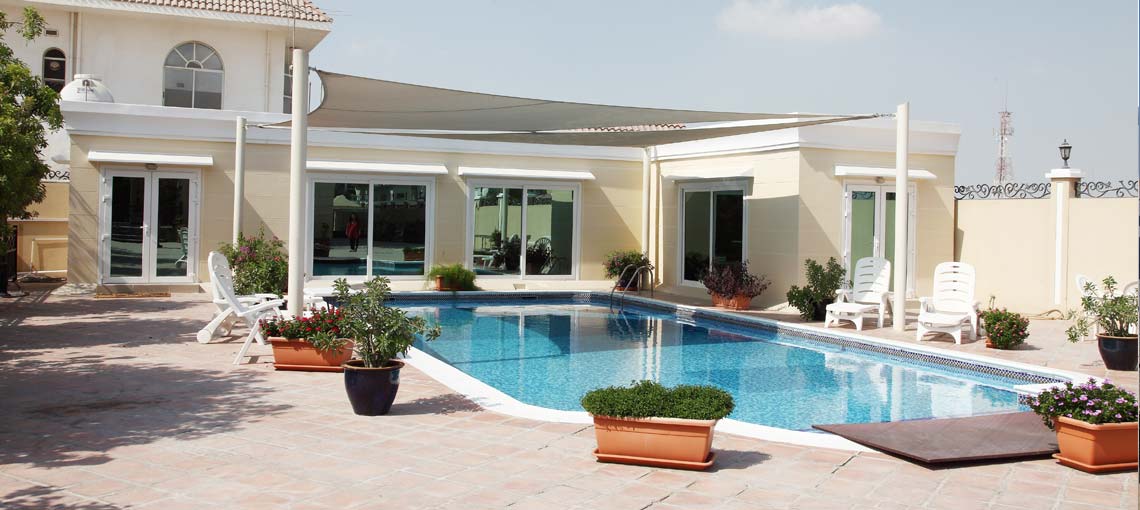
How Modular Office Buildings Improve Workflow Efficiency and Employee Experience

Workplaces change faster than ever. Teams expand, projects move, and timelines shrink. Traditional office buildings fail to meet these requirements. Modular office facilities offer a practical choice that supports operations and enhances employee workflow. These buildings prioritize structure and functionality over ornate design.

Modular office buildings now serve corporate offices and site headquarters. They also support spaces across industries. Their influence goes beyond faster construction. They affect workflow, communication, comfort, and long-term productivity.


Why Modular Office Buildings Fit Modern Work Needs

Modular buildings rely on off-site fabrication and on-site assembly. This approach reduces delays and enhances build precision. Teams move into functional spaces faster, without extended disruption.


Unlike traditional construction, modular offices allow planning around real operational needs. Layouts follow workflow patterns rather than rigid building constraints. This flexibility supports smoother daily activity. Prefab office buildings are suitable for both temporary and permanent use. Businesses can expand or relocate without losing previous investment.


Faster Setup Supports Business Momentum

Time affects productivity. Long construction periods slow hiring, delay projects, and strain budgets. Modular office buildings shorten setup time through parallel processes. While foundations are prepared on-site, units are built in factories. Once delivered, teams complete assembly quickly. This speed allows:

– Earlier occupancy

– Faster team onboarding

– Reduced downtime during expansion


Quick setup helps maintain momentum during growth or transition periods.


Layout Flexibility Improves Workflow Efficiency

Workflow depends on proximity, visibility, and movement. Modular office buildings allow planners to design layouts around actual tasks. Teams can place departments closer to reduce unnecessary movement. Meeting rooms can sit near decision-makers. Quiet zones can stay separate from active areas. Prefab office buildings support:

– Open-plan layouts for collaboration

– Enclosed spaces for focused work

– Shared areas for informal discussions


Clear zoning helps employees work without constant interruption.


Scalable Design Reduces Operational Disruption

Growth often brings disruption. Traditional offices require major renovation when teams expand. Modular office buildings scale with less impact. Companies can add units as headcount grows. They can also remove or relocate sections when projects end. This approach:

– Prevents overcrowding

– Avoids repeated construction noise

– Maintains workflow continuity


Consistent Build Quality Supports Daily Comfort

Employee convenience affects focus and outcome. Prefab office buildings benefit from factory-controlled settings that improve build quality. Uniform insulation, precise joins, and tested material reduce temperature variation and noise transfer. Employees work in stable conditions regardless of the weather outside. Comfort improvements include:

– Better thermal regulation

– Reduced external noise

– Reliable lighting placement


These elements support concentration during long work hours.


Improved Site Safety and Cleanliness

Construction zones disrupt work environments. Modular office buildings limit on-site activity, which reduces safety risks and clutter. Most building work happens off-site. On-site assembly requires fewer workers and less equipment. This results in:

– Safer surrounding areas

– Cleaner work sites

– Fewer operational interruptions


Employees remain focused instead of adapting to ongoing construction.


Standardised Spaces Improve Team Alignment

Consistency matters across teams. Prefab office buildings offer repeatable designs that create uniform work environments. Standardised layouts help employees adapt quickly when moving between sites. Training becomes easier. Expectations remain clear.


For companies managing multiple locations, modular offices ensure alignment without redesigning each space. TSSC delivers modular solutions that maintain consistency while allowing project-specific adjustments.


Better Space Utilisation Supports Employee Experience

Poor space planning wastes time and energy. Modular office facilities focus on efficient use of every square metre. Developers plan storage, circulation paths, and workstations with purpose. Every space serves a clear function. Benefits include:

– Less clutter

– Clear movement paths

– Improved workstation comfort


Employees feel less cramped and more supported during daily tasks.


Environmental Control Improves Work Quality

Indoor conditions affect alertness and morale. Modular office buildings support better environmental control through engineered materials and layouts. Proper ventilation planning reduces stale air. Insulation stabilises internal temperatures. Windows allow natural light while reducing glare. These factors:

– Reduce fatigue

– Improve focus

– Support longer productive periods


Prefab buildings create conditions that sustain performance.


Reduced Noise Improves Focus and Communication

Noise disrupts concentration and increases mental strain. Modular offices allow planners to maintain sound flow through layout and materials. Meeting rooms remain acoustically separated. Quiet work zones stay protected. Collaborative areas absorb activity noise. This balance improves:

– Clear conversations

– Focused individual work

– Reduced misunderstandings


Employees communicate better without constant distraction.


Adaptability Supports Different Work Styles

Not all roles require the same environment. Modular office buildings support varied work styles within one structure. Some employees need collaboration. Others need privacy. Modular layouts allow both without compromise. Spaces can include:

– Focus rooms

– Team hubs

– Breakout zones


This flexibility respects individual needs while supporting team goals.


Cost Predictability Reduces Workplace Stress

Budget uncertainty creates pressure. Prefab office buildings offer predictable costs through controlled manufacturing and clear timelines. Fewer delays reduce surprise expenses. Defined scopes limit change orders. Cost stability helps businesses plan confidently.

Employees benefit from faster transitions to stable workspaces. TSSC applies structured planning to reduce financial uncertainty during office development.


Relocation Without Productivity Loss

Business locations change. Modular office buildings can be moved with minimal loss. Companies can relocate offices without starting from scratch. Existing modules are moved to new sites and resume functioning quickly. This ability protects investment and keeps teams productive during transitions.


Long-Term Value for Growing Teams

Modular office buildings support long-term use without locking companies into fixed designs. Spaces adapt as teams evolve. Prefab office buildings suit industries that require flexibility, speed, and reliability. Their value lies in continued usability rather than one-time construction. TSSC delivers modular office solutions that support growth, efficiency, and employee comfort without unnecessary complexity.


Conclusion

As teams grow and work patterns change, modular office buildings provide businesses with a practical way to create spaces that support daily operations. Workflow efficiency and employee experience rely on space design as much as the management system. Modular office buildings provide structure and flexibility that traditional construction often lacks. Prefab office buildings support real work patterns while reducing disruption.

With thoughtful planning, these offices improve comfort, focus, and collaboration. TSSC supports businesses seeking reliable, adaptable office spaces that work as hard as their teams do.
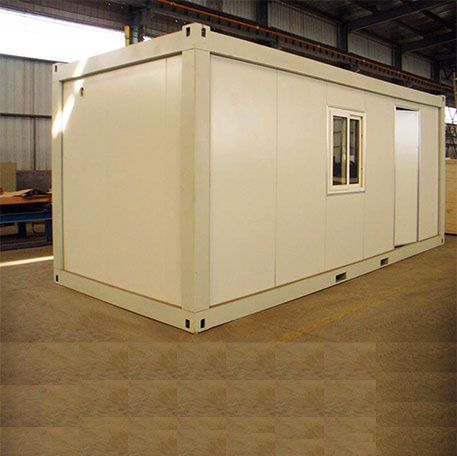
Rebuilding Healthcare in Gaza Through Modular Construction: Fast, Scalable Medical Facilities


The ongoing conflict in Gaza is destroying vital infrastructure. Therefore, restoring reliable health facilities is essential. You may be considering the most efficient ways to address urgent healthcare demands. The modular healthcare construction is an efficient alternative. Constructing flatpack modular buildings allows healthcare facilities to adapt quickly to evolving needs. Let’s examine modular healthcare construction to restore critical infrastructure in Gaza.

Comprehending Modular Construction

Modular construction is similar to assembling a large structure from prefabricated components. In Gaza, healthcare buildings can be constructed using insulated panels and lightweight frames. 

Notable features of modular healthcare infrastructure:

  • Factory-built components
  • Insulated panel systems
  • Lightweight, durable frames
  • Compact flatpack design
  • Rapid site assembly
  • Pre-engineered elements

This approach is especially beneficial when access routes are subject to security challenges. Upon arrival at the site, these already-engineered parts are assembled quickly.

The Advantage of Speed in Deployment

Traditional building projects typically take longer, while modular solutions significantly reduce timelines. Moreover, factory production is conducted simultaneously with site preparation.

Advantages of modular healthcare construction:

  • Quick deployment time
  • Parallel production process
  • Weeks, not months
  • Immediate operational readiness
  • Reduced construction delays
  • Efficient site preparation

In Gaza, where access to medical treatment is crucial, this short timeframe is highly valuable. Furthermore, emergency personnel can easily set up clinics as diagnostic units.

Achieving Infrastructure for Future Needs

If healthcare demand increases, new modules can be incorporated into the existing structure. It could mean adding more areas for patient care, labs, and administrative functions. 

Modular construction facilitates healthcare requirement change because:

  • Easy capacity expansion.
  • Additional module integration.
  • Flexible reconfiguration options.
  • Standardized component connections.
  • Long-term adaptability.
  • Relocatable structural sections.

These designs can also be reconfigured if priorities change over time. Additionally, flatpack modular structures rely on standardized parts that join smoothly.

Ensuring Reasonable Pricing

Modular construction is cost-effective and ideal for regions with limited funding. Manufacturing in factories reduces waste by ensuring greater precision. It also reduces labor costs by moving a large portion of the tasks off-site. 

How flatpack modular buildings save resources:

  • Reduced material waste.
  • Lower labor costs.
  • Energy-efficient materials.
  • Decreased operational expenses.
  • Budget stretching potential.
  • Multiple facility support.

These energy-efficient products can further reduce the long-term operational costs. It also allows the company to use resources across multiple buildings.

Incorporating Sustainable Practices

Factory processes reduce excess material use and enable the reuse of many elements. In Gaza, resource conservation aligns with humanitarian objectives to protect local resources. 

Incorporate the following sustainable practices with flatpack modular buildings:

  • Minimal material waste.
  • Recyclable building components.
  • Environmentally responsible insulation.
  • Resource conservation focus.
  • Healthy indoor quality.
  • Resilient long-term infrastructure.

Flatpack systems include sustainable insulation that helps maintain comfort and promote indoor air quality. This method helps create a durable infrastructure capable of withstanding extreme conditions.

Practical Applications in Gaza’s Healthcare

Primary care clinics can be placed in areas lacking services. Moreover, these are equipped with consultation rooms and record-keeping zones. In this way, they can focus on routine healthcare and the management of existing conditions.

Flexible applications of modular healthcare construction:

  • Primary care clinics.
  • Rapid field hospitals.
  • Consultation room setup.
  • Surgical capability integration.
  • Isolation zone provision.
  • Targeted local customization.

In response to emergencies, flatpack design enables the swift setup of field hospitals.

Integrating Modern Technology

Modular systems can be adapted to modern technology from the start. Solar power systems can provide independent power and are particularly useful in areas with less reliable grid service. 

The different modern technologies in modular healthcare construction are listed below:

  • Solar power systems.
  • Independent electricity supply.
  • Telemedicine digital support.
  • Electronic record management.
  • Service continuity assurance.
  • Enhanced care efficiency.

Digital infrastructure enables telemedicine consultations and electronic patient records, helping maintain continuous service. The integration of systems ensures that healthcare delivery aligns with modern technological advances. This increases efficiency and improves the quality of patient care, even in complex settings.

Modular Healthcare Construction With A Notable Company

When evaluating advanced modular health initiatives, contact healthcare providers for valuable guidance. TSSC Group offers prefabricated and flatpack products designed to ensure top-quality construction. 

  • Prefabricated solution range.
  • Flatpack construction expertise.
  • High-quality, durable builds.
  • Timely project delivery.
  • Scalable healthcare support.
  • Professional manufacturer guidance.

TSSC Group’s dedication to quality supports hospital restoration efforts in Gaza. It is worth taking the time to review their services. In this way, you can align your work with scalable, adaptable expert methods.

Conclusion

Rebuilding in Gaza through modular healthcare construction is the most efficient approach. These buildings enable rapid service expansion and support underserved populations. Moreover, it provides a solid basis for long-term accessibility to healthcare. Thus, visit TSSC Group to explore its healthcare construction services.

FAQs


What factors make modular construction quicker than traditional approaches?

The following factors make modular construction comparatively faster than conventional approaches.

  • Reduces time-to-market.
  • Allows large-scale production.
  • Enables simultaneous site preparation.


How can scalability be achieved in a flatpack modular building?

The ability to scale allows additional modules to be added. It makes expansion and adaptation easier.


Do modular healthcare facilities offer cost benefits?

The various benefits of modular health facilities are given below.

  • Increase production efficiency.
  • Reducing wastes.
  • Reduce on-site labor.


What is the best way to use modular structures?

Begin by contacting specialized suppliers of prefabricated equipment. You need to discuss customization options for your project and site conditions.

Top 10 Benefits of Prefabricated Modular Construction

Prefab modular construction has emerged as a standout innovation in the construction industry, increasing efficiency and appeal over traditional building methods. This approach involves manufacturing building sections, or modules, within a controlled factory environment before assembling them on-site. Its growing popularity reshapes construction by emphasizing speed, efficiency, and sustainability. Below, we have picked out the top 10 benefits of prefabricated modular construction and how it is a total game-changer in construction.

1. Fast Completion of Project

One key benefit of prefabricated modular construction is the speed at which projects can be completed. Unlike traditional construction, which is an on-site and time-consuming process, modular construction facilitates simultaneous on-site work and concurrent work in the factory.

While site preparation, such as preparing the foundation, takes place on location, the modules are simultaneously fabricated off-site in a controlled factory setting, thus saving much project time. Consequently, the buildings can be completed weeks or months ahead of schedule.

2. Cost-Effectiveness

Prefabricated modular construction offers significant cost-saving benefits throughout a project.

By manufacturing modules in a controlled factory environment, labor costs are lower, and there is less waste. Furthermore, the construction process is more efficient, reducing the overall number of resources required.

These cost efficiencies make modular construction attractive to clients seeking budget-friendly solutions without compromising quality or timelines.

3. Quality Control

Quality control is more consistent in factory construction because all the parts are fabricated in a controlled environment, where every module is strictly measured to high standards and regulations. It is challenging to achieve such accuracy in traditional construction because weather, delays, and on-site conditions affect the quality of work. Modular construction lowers such risks and produces higher-quality results.

4. Sustainability

As sustainability continues to gain importance in the construction industry, prefab modular buildings are more environmentally friendly. Most of the construction is done inside a factory, which reduces the taste and the use of raw materials.

Prefabricated buildings are also usually designed to be energy efficient, with appropriate insulation and other materials that reduce energy consumption. This also means less on-site work, which reduces the environmental impact through transportation and labor.

5. Design Flexibility

In reality, modular construction is anything but rigid, with very limited design options. On the contrary, contemporary prefabricated buildings offer various customization possibilities.

The modular method permits flexible floor plans, layouts, and finishes, whether for a residential, office, or commercial building. Modular construction can easily be integrated into many aesthetic styles and functions through design and engineering improvements. Thus, the best of both worlds will be provided: customized design combined with the efficiency of prefabrication.

6. Less Site Disturbance

Traditional construction can be disruptive, causing everything from noise and dust to traffic congestion and waste. Prefabricated modular construction minimizes these disruptions because most of the work happens off-site. With less on-site activity, the community around the site suffers fewer inconveniences and is ready for use much faster. This benefit makes modular construction especially attractive in urban areas or where environmental considerations are paramount.

7. Improved Working Conditions

Anything built is safe, but prefabricated modular construction can considerably improve working conditions for construction workers. Most of the work happens under controlled factory circumstances, reducing the possibility of various risks, such as adverse climate conditions, unhygienic on-site conditions, and heavy machinery risks, ensuring fewer accidents or casualties.

This is very safe from the traditional approach of the building process.

8. Scalability and expansion

Prefabricated modular construction provides excellent scalability. From small single-family homes to the largest commercial complexes, modular approaches make it easy to expand or change the structure later. Adding a new module or section to an existing building is less complicated than traditional construction and offers long-term flexibility for a growing need.

9. Reduced Labor Shortages

With the rapidly increasing shortage of skilled labor in construction, prefabricated modular construction is very promising. Since the modules are constructed in a factory, the demand for on-site labor is lesser.

Thus, it promotes good project management without depending on scarce labor and maximizes the utilization of available ones. In addition, these factory workers are trained for the primary purpose of module construction; therefore, each is highly skilled and experienced.10. Higher Resilience
Prefabricated modular buildings are usually more resilient than conventional buildings. The modular approach results in accurate manufacturing and the incorporation of quality materials, giving the building a longer life before it wears out. Additionally, since the modules are transported as pre-assembled sections, they may be reinforced for better structural integrity while in transit, resulting in a strong and durable final building.

Conclusion

Prefabricated modular construction represents a modern, fast, cost-efficient, sustainable, and variable approach. Its numerous benefits, including rapid project delivery, enhanced safety, and reduced environmental impact, are redefining traditional construction methods and setting new industry standards.

TSSC Group is among the leading providers of modular construction solutions in the GCC, Africa, and India. We deliver high-quality modular construction solutions to clients from all sectors, offering excellent, timely performance for each project. Committed to modular design excellence, TSSC Group ensures your project meets the highest efficiency and quality standards.

Whether it’s a home, office, or commercial space, modular prefabricated construction is paving the way for a modern, more sustainable, and efficient future.

Why is the construction industry trying to shift to prefabrication?

Prefabrication must have some advantages compared to traditional building techniques. Cost is a big and the most important factor and prefabrication can help builders cut down the costs to a great extent. A prefabricated building is already assembled inside the factory. So, almost all the work is done. So, you do not require hiring plumbers, electricians or carpenters. So, due to several other advantages, the popularity of prefab structures is increasing tremendously. The construction market in the Gulf area is booming with a lot of apartments, bungalows and hotels coming up. With so much advancement, traditional construction has taken a back seat. 

Prefabrication reduces risks and costs 

Prefab construction is suitable for projects having a high redundancy. Some of the construction areas where prefabrication is preferred include hotels, schools, colleges, hospitals, hostels, malls, and more. Are you aware of the climatic conditions in the Gulf area? Oman is no exception where days are extremely hot and the workers struggle under the sun to erect a construction. Also, the present construction industry has a shortage of skilled workers. The traditional method requires many workers to complete the project, which takes a lot of time. The traditional construction is also dependent on weather conditions. The process is halted if the weather is bad or due to natural calamities which causes delay. But there are no such challenges in prefabricated construction. A small group of workers can complete the construction work inside the factory. 

Prefabrication is eco-friendly 

Penalization is also an activity that is included in prefabrication. It involves floors, walls, and roofs constructed in the factory before being transported to the site. Electricals, plumbing, and other infrastructure are installed later on. Prefabricated construction is eco-friendly and happens without extremities and complications. The whole process is streamlined and takes place inside a controlled environment. As a result, very little raw material is wasted, which does not create pollution. 

Why choose TSSC in Oman?

TSSC Group is operating successfully in the Gulf Area and we are the leaders in manufacturing prefab insulated panels. The prefab structures are sustainable and energy-efficient. Our engineers are experts in implementing the most advanced technology to design building solutions. TSSC is the leader in designing roofing and cladding solutions. We have a lot of clients from various industries who are taking an interest in prefabricated structures. Our engineers implement lean technology to assemble the modules and inter-module structures. 

TSSC Group has been offering prefab buildings in Oman for more than 50 years. We have clients from various industries who have chosen TSSC solutions and are satisfied. Now, many modern techniques are implemented to take the construction industry forward and meet customer demands. As a result, the housing and building market is highly competitive and now Oman is experiencing a lot of development.

Talk to the TSSC experts

Are you interested in knowing more about prefab buildings in Oman? Then, book a free consultation with the TSSC experts to discuss your projects with us. We design customized solutions to suit your specific requirements, keeping in mind the climate, budget, location, and other factors. 

Please discuss your project with us and request a quote.