


Data Centre Cooling Systems: How to Manage Heat in High-Density Facilities
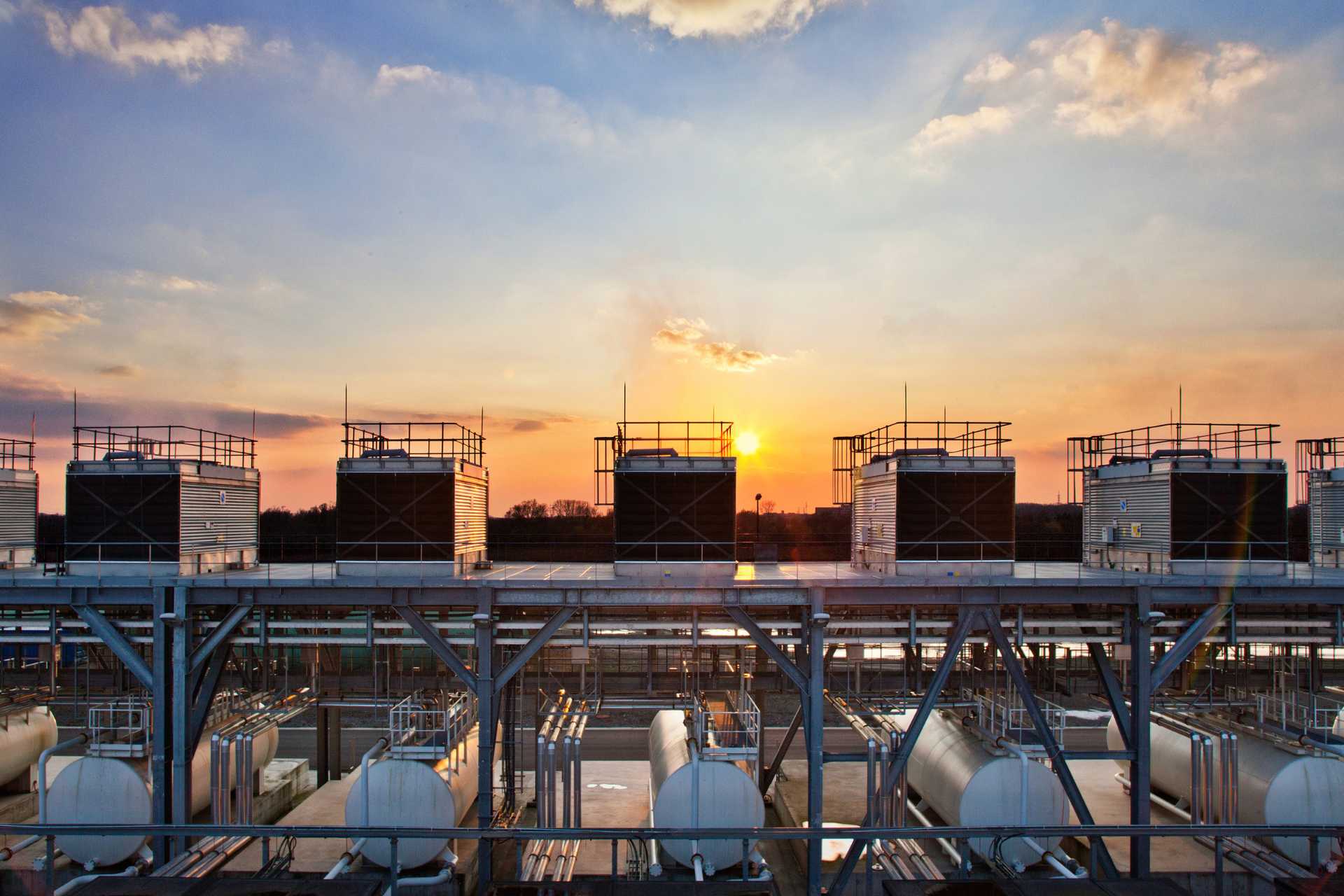
Data centre cooling systems remove the heat generated by servers, storage, and networking equipment so that IT hardware runs within safe temperature and humidity limits, 24/7. As cloud, AI, and high-density workloads grow, the most effective cooling solutions combine precision temperature and humidity control, efficient heat rejection, modular scalability, and a well-insulated building envelope.
Every watt of power a server consumes eventually becomes heat. In a modern facility running dense racks around the clock, that heat load is relentless. If cooling falls short, the consequences include throttled performance, shortened hardware life, and unplanned downtime.
This guide explains how heat behaves in high-density facilities, what to look for in cooling systems for data centres, and how TSSC’s integrated cooling systems, part of the Harwal Group, are designed to deliver stable, energy-efficient performance.
Key Takeaways
- Data centre cooling must control both temperature and humidity, not just temperature.
- High density data centre cooling demands reliable performance at the rack, plus efficient heat rejection at the facility level.
- Cooling efficiency directly affects PUE (Power Usage Effectiveness) and operating costs.
- Modular, factory-built cooling systems make it easier to scale capacity as IT loads grow.
- The building envelope (insulated panels, roofing, fire-rated partitions) works together with the cooling plant to protect thermal stability.
Why Heat Management Is the Defining Challenge of Modern Data Centres
Today’s digital infrastructure depends on facilities that are secure, energy-efficient, scalable, and operational around the clock. Growing demand for cloud services, AI, and high-density data storage has pushed rack power levels well beyond what older facilities were designed for.
Heat management matters for four reasons:
- Uptime: Overheating can contribute to equipment failure, performance issues, and unplanned outages.
- Hardware lifespan: Sustained high temperatures and unstable humidity accelerate component wear.
- Energy cost: Cooling is typically one of the largest non-IT loads in a facility, so its efficiency drives operating expenses.
- Capacity: A facility can only host as much IT load as its cooling can remove.
What Are Data Centre Cooling Systems?
Data centre cooling systems are engineered plants and distribution networks that absorb heat from IT equipment and reject it outside the building. A typical system includes:
- Precision cooling units that condition the air (or fluid) in the IT space
- Heat-rejection equipment that discharges the collected heat to the environment
- Controls and monitoring that keep temperature and humidity stable
- Redundancy and modularity that protect operations during maintenance or failure
Unlike comfort air conditioning, data centre cooling runs continuously and must hold tight setpoints. It also has to respond quickly as IT loads change.
Data Centre Cooling Requirements and Their Importance
| Cooling Requirement | Why It Matters |
| Temperature control | Prevents excessive thermal stress on IT equipment |
| Humidity control | Helps reduce risks associated with excessive moisture or static |
| Heat rejection | Transfers accumulated heat outside the facility |
| Modularity | Allows cooling capacity to grow with IT demand |
| Energy efficiency | Helps control operating costs and Power Usage Effectiveness |
| Redundancy | Supports continuity during maintenance or equipment failure |
The Core Challenges of High-Density Data Centre Cooling
High density data centre cooling is harder than conventional cooling because heat is concentrated into a smaller footprint. The main challenges are:
- Concentrated hot spots: Dense racks produce far more heat per square metre, and uneven airflow can leave pockets of equipment running hot.
- Fast-changing loads: AI and cloud workloads can spike, so cooling must respond without overshooting or wasting energy.
- Humidity control: Air that is too dry raises static discharge risk, and air that is too humid risks condensation and corrosion.
- Growth uncertainty: Operators often cannot predict future capacity needs precisely, so cooling must expand without major rebuilds.
- Energy efficiency pressure: Higher densities mean higher cooling energy, so efficiency gains have a large financial and sustainability impact.
How TSSC’s Integrated Cooling Systems Address These Challenges
TSSC’s advanced cooling systems are designed for high-performance data centres, delivering precise, energy-efficient climate control. They are modular and scalable, supporting thermal stability, lower operating costs, and consistent performance for secure, uninterrupted operations.
1. Precision Temperature and Humidity Control
Stable IT environments depend on holding temperature and humidity within tight, predictable limits. TSSC’s integrated cooling systems provide precision control of both, protecting sensitive equipment from the thermal swings and moisture problems that cause failures.
Industry context: ASHRAE’s recommended operating envelope for most IT equipment is 18–27°C, and precision systems are built to hold conditions steadily inside the target range rather than cycling around it.
2. Reliable Cooling Performance for High-Density Racks
As rack densities climb, cooling has to deliver capacity exactly where heat is produced. TSSC’s systems are engineered to provide reliable cooling performance for high-density racks, helping operators deploy demanding compute without compromising thermal stability.
3. High-Efficiency Cooling and Heat Rejection for Lower Power Usage Effectiveness (PUE)
Power Usage Effectiveness is the ratio of total facility energy to the energy used by IT equipment. The closer it is to 1.0, the less energy is spent on overhead such as cooling. TSSC pairs high-efficiency cooling with heat-rejection technologies to help lower Power Usage Effectiveness, which reduces operating costs and supports sustainability targets.
Heat rejection is where the heat removed from the IT space is finally released to the outside environment. Efficient heat-rejection equipment reduces the energy needed to reject each unit of heat, a benefit that compounds over years of continuous operation.
4. Scalable Modular Systems for Future Capacity Expansion
Few operators fill a facility on day one. TSSC’s cooling systems are modular, so capacity can be added in step with IT growth rather than oversizing the plant up front. This approach:
- Avoids paying for cooling capacity long before it is needed
- Reduces disruption when expanding
- Supports phased deployments across new halls or zones
5. Factory-Built, Pre-Engineered Units for Fast Deployment
TSSC’s cooling systems are factory-built and pre-engineered, which means faster site deployment and consistent quality. Building units in controlled factory conditions reduces on-site variability, shortens project timelines, and simplifies commissioning.
Cooling Doesn’t Work Alone: The Building Envelope Matters
Even the best cooling plant loses efficiency if the building leaks heat, air, or moisture. That is why TSSC delivers integrated building and cooling systems that combine structural engineering, thermal insulation, fire performance, acoustic control, and temperature-controlled environments.
- Insulated wall and roof panels reduce heat gain, so cooling equipment works less. TSSC’s PIR panels are designed for thermal efficiency, and the roofing range offers an energy-efficient PIR core to reduce heat gain.
- Fire and acoustic protection: FM-approved FireSpan mineral wool panels provide up to 180 minutes of fire integrity for critical zones, and EASYWALL internal partitions offer up to 4 hours of fire resistance for equipment rooms and specialised zones.
- Solar-ready roofing: Standing seam and solar-integrated roof panels support sustainability goals alongside efficient cooling.
Fire performance of supporting building systems
| Product | Core / type | Fire performance | Approvals |
| FireSpan panels | Non-combustible mineral wool | Up to 180 minutes of fire integrity | FM approved |
| EASYWALL partitions | Internal partition system | Up to 4 hours of fire resistance | Dubai Municipality & UAE Civil Defense approved product |
| PIR sandwich panels | PIR core | Up to 170 minutes | FM approved, Dubai Civil Defence approved |
How to Choose the Right Cooling Systems for Data Centres
When evaluating data centre cooling solutions, ask these questions:
- Can it hold temperature and humidity precisely under changing loads?
- Is it proven for high-density racks, both today and at your projected future density?
- How efficient is it, and what does that mean for your target Power Usage Effectiveness?
- Can it scale modularly without major redesign?
- How fast can it be deployed, and is the equipment factory-built for consistent quality?
- Is it coordinated with the building envelope, including insulation, air tightness, and fire performance?
- Does the supplier have a track record in industrial, commercial, and mission-critical facilities?
Frequently Asked Questions
What are data centre cooling systems?
They are engineered systems that remove heat from IT equipment and reject it outside the facility, keeping temperature and humidity within safe limits for continuous operation.
Why is high density data centre cooling more challenging?
High-density racks concentrate more heat in less space, creating hot spots, faster load changes, and higher energy demands. Cooling must deliver precise, reliable capacity where it is needed.
How do cooling systems affect Power Usage Effectiveness?
Cooling is a major share of a facility’s non-IT energy use. More efficient cooling and heat rejection lowers total facility energy relative to IT energy, improving PUE.
Why does humidity control matter in a data centre?
Air that is too dry increases static discharge risk, and air that is too humid can cause condensation and corrosion. Precision systems keep humidity within a safe range alongside temperature.
What is the advantage of modular cooling systems?
Modular systems let you add capacity as IT load grows, avoiding oversizing and reducing disruption during expansion.
Does the building envelope affect cooling performance?
Yes. Insulated panels, air-tight and water-tight construction, and well-designed roofing reduce heat gain and leakage, so the cooling plant works more efficiently.
Build a Cooler, More Reliable Data Centre with TSSC
TSSC, a member of the Harwal Group, delivers integrated building and cooling systems engineered for the evolving demands of modern data centres, from precision cooling and heat rejection to insulated envelopes, fire-rated partitions, and structural steel.
Ready to discuss your data centre cooling requirements?
- Website: www.tsscgroup.com
- Email: sales@tsscgroup.com
- Dubai Investments Park: +971 4 8850474
- Abu Dhabi: +971 2 6768748
- Riyadh: +966 11 4992800
 Call Us on :
