


How Proper Cold Store Insulation Helps Businesses Meet Global Food Safety Standards
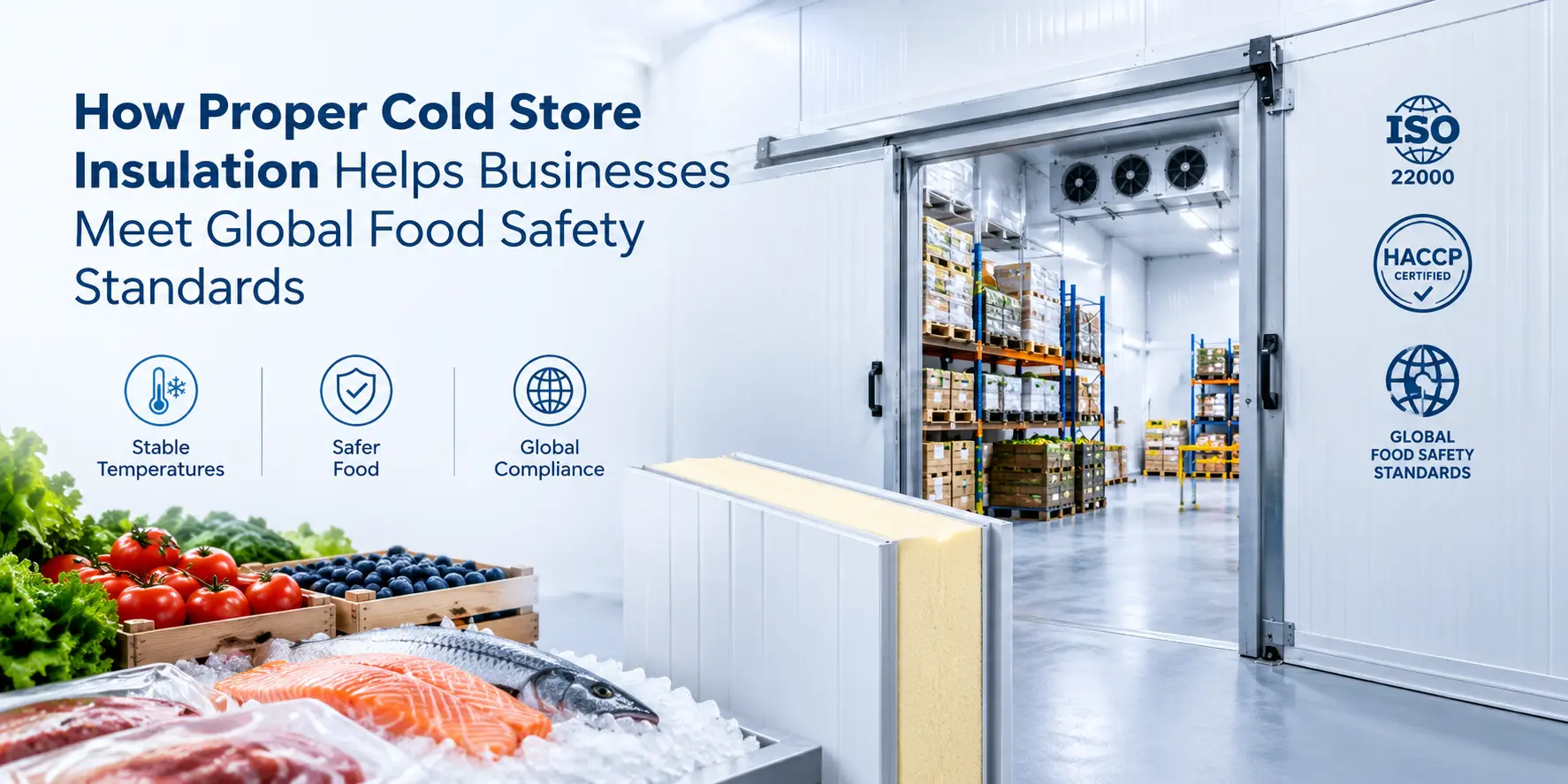
Food safety rules are strict in global markets. When you store food, you must control temperature and contamination at all times. A small issue in a cold storage facility can spoil food and cause losses. It can also create problems during safety inspections. That is why insulation inside high-performance cold rooms matters so much. Good insulation keeps temperatures steady and blocks outside heat. It also helps control humidity and air movement. When storage conditions stay stable, food remains safe. This helps you meet global food safety standards and protect product quality during storage and distribution.
Top 10 Ways in Which Proper Cold Store Insulation Helps Businesses Meet Global Food Safety Standards
Good insulation supports the basic function of a cold storage facility. It helps control temperature and airflow. When insulation works well, you reduce risk and protect food quality.
1. Maintains Stable Temperature
Food safety rules require stable temperatures during storage. Even small changes can affect food quality. Proper insulation helps you keep the cold room temperature steady.
- Reduces heat entering the storage space
• Keeps cooling systems working efficiently
• Maintains even temperature across the room
Stable temperatures protect food from damage. They also help you follow food storage regulations. With high-performance cold rooms, temperature control becomes easier and more reliable.
2. Prevents Bacterial Growth
Bacteria grow quickly when food storage temperatures rise. Safe cold storage slows this growth. Insulation helps keep the environment cold and controlled.
- Keeps food within safe temperature limits
• Blocks warm air from entering the cold room
• Supports regular hygiene checks
When bacterial growth stays low, food stays safe longer. This reduces the risk of product recalls. It also helps you maintain trust with customers and buyers.
3. Reduces Moisture and Condensation
Condensation often forms when warm air meets cold surfaces. Too much moisture can damage food packaging. It can also lead to mold growth.
- Limits water buildup on walls and ceilings
• Protects cartons and packaging materials
• Reduces mold and moisture problems
Dry storage areas help keep food clean and safe. They also protect the building structure. Good insulation helps control these moisture issues.
4. Improves Energy Efficiency
Poor insulation allows outside heat to enter the cold room. This forces the cooling system to work harder. Proper insulation helps reduce this load.
- Keeps cold air inside the storage area
• Reduces strain on refrigeration systems
• Lowers electricity use
Lower energy use helps reduce operating costs. It also keeps equipment running smoothly. Efficient storage systems are easier to manage over time.
5. Supports Regulatory Compliance
Food businesses must follow strict storage rules. Inspectors check temperature control and storage conditions. Proper insulation helps you meet these requirements.
- Maintains approved storage temperatures
• Supports records during safety inspections
• Helps meet HACCP and food safety guidelines
Reliable cold storage makes inspections easier. It also reduces the chance of penalties. Stable storage systems help you stay compliant.
6. Protects Food Quality
Food can lose quality when temperatures change too often. Taste, texture, and freshness may suffer. Proper insulation helps you protect these qualities.
- Maintains a steady storage environment
• Protects sensitive foods like dairy and seafood
• Reduces product spoilage
Better food quality improves customer satisfaction. It also reduces product waste. Stable storage conditions help keep food in good condition.
7. Extends Shelf Life
Many foods need controlled storage conditions. When temperatures remain stable, food lasts longer. Insulation helps maintain these conditions.
- Keeps storage temperatures steady for longer periods
• Slows bacterial growth
• Protects food from temperature swings
Longer shelf life helps reduce waste. It also improves inventory management. You can store products longer without risking safety.
8. Improves Cold Chain Reliability
Cold storage is one step in the full cold chain process. Food often moves through many locations before it reaches customers. Reliable storage keeps the process smooth.
- Maintains safe conditions before distribution
• Supports smooth loading and unloading
• Reduces risk during product transfer
When storage conditions stay stable, the entire cold chain benefits. Food stays safe during transport and delivery. This supports food safety from production to sale.
9. Protects Storage Infrastructure
Cold storage facilities face constant temperature changes. Without insulation, walls and structures can suffer damage. Good insulation protects the building itself.
- Reduces stress from temperature changes
• Prevents moisture damage and corrosion
• Extends the life of the storage system
Stronger infrastructure means fewer repairs. Maintenance costs stay lower. Your cold storage facility lasts longer.
10. Supports Consistent Monitoring
Food safety requires regular monitoring of storage conditions. Sensors and monitoring systems need stable environments to work well. Insulated cold rooms support accurate tracking.
- Provides reliable temperature readings
• Helps detect problems early
• Makes safety reports easier to manage
When monitoring works well, you can act quickly. This prevents food spoilage and safety issues. Stable storage conditions support better control.
Conclusion
Proper insulation helps you store food safely throughout the cold chain.
High-performance cold storage panels control temperature, reduce moisture, and limit contamination risks.
High-performance cold rooms keep storage conditions stable and protect food quality. They also reduce energy use and help equipment perform efficiently, making it easier to meet global food safety and cold storage standards.
Good insulation also cuts maintenance costs and lowers product loss. Reliable cold storage supports safe food handling and product integrity across the supply chain. TSSC Group provides energy-efficient, hygienic cold storage panels and solutions designed to support modern cold storage requirements.
 Call Us on :
