


Rebuilding Healthcare in Gaza Through Modular Construction: Fast, Scalable Medical Facilities
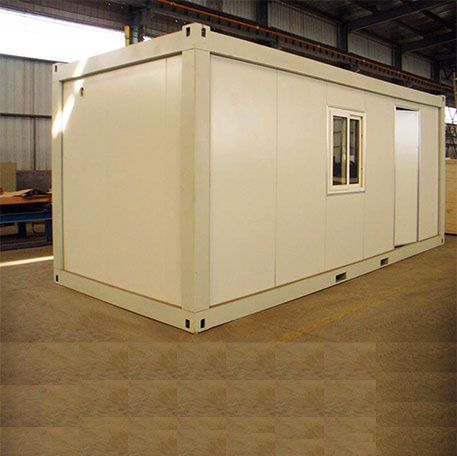
The ongoing conflict in Gaza is destroying vital infrastructure. Therefore, restoring reliable health facilities is essential. You may be considering the most efficient ways to address urgent healthcare demands. The modular healthcare construction is an efficient alternative. Constructing flatpack modular buildings allows healthcare facilities to adapt quickly to evolving needs. Let’s examine modular healthcare construction to restore critical infrastructure in Gaza.
Comprehending Modular Construction
Modular construction is similar to assembling a large structure from prefabricated components. In Gaza, healthcare buildings can be constructed using insulated panels and lightweight frames.
Notable features of modular healthcare infrastructure:
- Factory-built components
- Insulated panel systems
- Lightweight, durable frames
- Compact flatpack design
- Rapid site assembly
- Pre-engineered elements
This approach is especially beneficial when access routes are subject to security challenges. Upon arrival at the site, these already-engineered parts are assembled quickly.
The Advantage of Speed in Deployment
Traditional building projects typically take longer, while modular solutions significantly reduce timelines. Moreover, factory production is conducted simultaneously with site preparation.
Advantages of modular healthcare construction:
- Quick deployment time
- Parallel production process
- Weeks, not months
- Immediate operational readiness
- Reduced construction delays
- Efficient site preparation
In Gaza, where access to medical treatment is crucial, this short timeframe is highly valuable. Furthermore, emergency personnel can easily set up clinics as diagnostic units.
Achieving Infrastructure for Future Needs
If healthcare demand increases, new modules can be incorporated into the existing structure. It could mean adding more areas for patient care, labs, and administrative functions.
Modular construction facilitates healthcare requirement change because:
- Easy capacity expansion.
- Additional module integration.
- Flexible reconfiguration options.
- Standardized component connections.
- Long-term adaptability.
- Relocatable structural sections.
These designs can also be reconfigured if priorities change over time. Additionally, flatpack modular structures rely on standardized parts that join smoothly.
Ensuring Reasonable Pricing
Modular construction is cost-effective and ideal for regions with limited funding. Manufacturing in factories reduces waste by ensuring greater precision. It also reduces labor costs by moving a large portion of the tasks off-site.
How flatpack modular buildings save resources:
- Reduced material waste.
- Lower labor costs.
- Energy-efficient materials.
- Decreased operational expenses.
- Budget stretching potential.
- Multiple facility support.
These energy-efficient products can further reduce the long-term operational costs. It also allows the company to use resources across multiple buildings.
Incorporating Sustainable Practices
Factory processes reduce excess material use and enable the reuse of many elements. In Gaza, resource conservation aligns with humanitarian objectives to protect local resources.
Incorporate the following sustainable practices with flatpack modular buildings:
- Minimal material waste.
- Recyclable building components.
- Environmentally responsible insulation.
- Resource conservation focus.
- Healthy indoor quality.
- Resilient long-term infrastructure.
Flatpack systems include sustainable insulation that helps maintain comfort and promote indoor air quality. This method helps create a durable infrastructure capable of withstanding extreme conditions.
Practical Applications in Gaza’s Healthcare
Primary care clinics can be placed in areas lacking services. Moreover, these are equipped with consultation rooms and record-keeping zones. In this way, they can focus on routine healthcare and the management of existing conditions.
Flexible applications of modular healthcare construction:
- Primary care clinics.
- Rapid field hospitals.
- Consultation room setup.
- Surgical capability integration.
- Isolation zone provision.
- Targeted local customization.
In response to emergencies, flatpack design enables the swift setup of field hospitals.
Integrating Modern Technology
Modular systems can be adapted to modern technology from the start. Solar power systems can provide independent power and are particularly useful in areas with less reliable grid service.
The different modern technologies in modular healthcare construction are listed below:
- Solar power systems.
- Independent electricity supply.
- Telemedicine digital support.
- Electronic record management.
- Service continuity assurance.
- Enhanced care efficiency.
Digital infrastructure enables telemedicine consultations and electronic patient records, helping maintain continuous service. The integration of systems ensures that healthcare delivery aligns with modern technological advances. This increases efficiency and improves the quality of patient care, even in complex settings.
Modular Healthcare Construction With A Notable Company
When evaluating advanced modular health initiatives, contact healthcare providers for valuable guidance. TSSC Group offers prefabricated and flatpack products designed to ensure top-quality construction.
- Prefabricated solution range.
- Flatpack construction expertise.
- High-quality, durable builds.
- Timely project delivery.
- Scalable healthcare support.
- Professional manufacturer guidance.
TSSC Group’s dedication to quality supports hospital restoration efforts in Gaza. It is worth taking the time to review their services. In this way, you can align your work with scalable, adaptable expert methods.
Conclusion
Rebuilding in Gaza through modular healthcare construction is the most efficient approach. These buildings enable rapid service expansion and support underserved populations. Moreover, it provides a solid basis for long-term accessibility to healthcare. Thus, visit TSSC Group to explore its healthcare construction services.
FAQs
What factors make modular construction quicker than traditional approaches?
The following factors make modular construction comparatively faster than conventional approaches.
- Reduces time-to-market.
- Allows large-scale production.
- Enables simultaneous site preparation.
How can scalability be achieved in a flatpack modular building?
The ability to scale allows additional modules to be added. It makes expansion and adaptation easier.
Do modular healthcare facilities offer cost benefits?
The various benefits of modular health facilities are given below.
- Increase production efficiency.
- Reducing wastes.
- Reduce on-site labor.
What is the best way to use modular structures?
Begin by contacting specialized suppliers of prefabricated equipment. You need to discuss customization options for your project and site conditions.
 Call Us on :
